Industrial Monitoring Solutions
Industrial-IoT monitoring technologies covering mine-safety monitoring, machinery fault diagnosis and power-supply asset management. JingChuang also delivers complete smart-industry IoT systems built upon our in-house sensors.
Mine Safety Monitoring System Design
Underground mining sites face prominent safety risks including combustible-gas accumulation, poor ventilation and rock-fall hazards. Manual patrols and fixed-point sensors cannot achieve full-coverage detection, while harsh underground conditions bring high requirements for real-time monitoring.
This IoT-based mine-safety reference system adopts a three-layer architecture. Sensing nodes deployed at key underground points collect multi-dimensional data: combustible-gas concentration, ambient temperature and personnel activity signals. Field nodes connect through the standard RS485 bus; data is aggregated in the data-transmission & processing layer for wired forwarding. The upper application & service layer realizes data storage, analysis and operator-oriented visualization. Alarms trigger automatically once readings exceed safety thresholds.
Monitoring & Alarm Data Flow
Research-reference fault-detection signal types for industrial equipment: Vibration | Acoustic | Image | Current
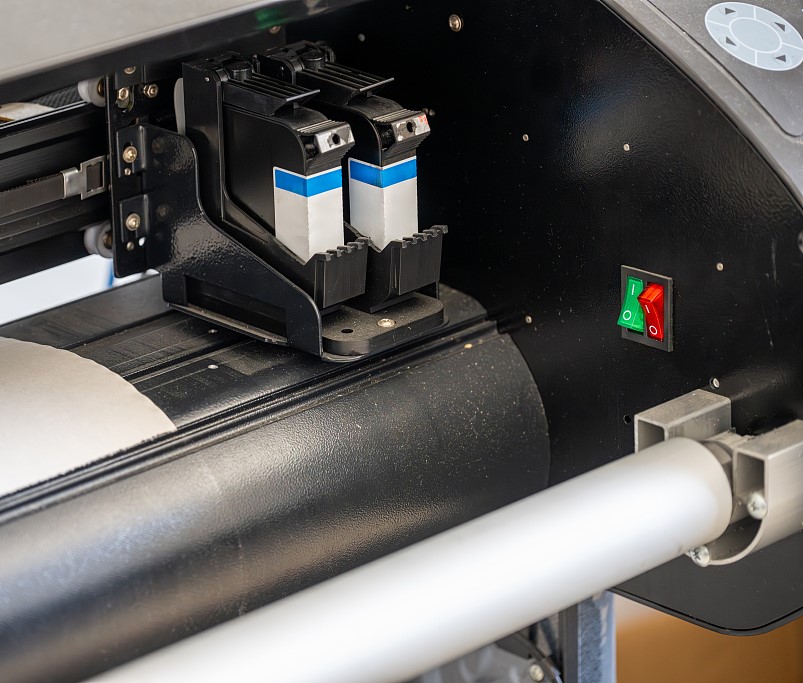
Fault Diagnosis for Industrial Precision Printing Presses
High-precision printing machinery integrates mechanical, optical, hydraulic and pneumatic units. Minor component faults can cause quality defects and massive waste output. Faults mainly occur in unwinding/rewinding mechanisms and printing units.
Four signal categories are available for condition-monitoring: vibration, acoustic, image and current. Vibration-signal analysis delivers the best practical performance; tri-axial accelerometers mounted on printing rollers capture rich fault features. Acoustic signals are prone to interference-caused distortion, while compact internal structures limit image acquisition.
Signal-processing evolves from Fourier transform to wavelet-analysis for better time-frequency fault-feature localization. Combined IoT-sensing and deep-learning-based recognition enables automatic fault diagnosis and reduces reliance on manual experience.
Signal Acquisition
Collect vibration, acoustic, image and current signals; tri-axial accelerometers on equipment rollers capture operating vibration data.
Signal Processing
Wavelet-analysis extracts localized fault features to overcome Fourier-transform limitations.
IoT & AI-oriented Development Trend
Wireless sensor networking, online IoT monitoring and deep-learning-driven fault identification are mainstream directions.
IoT-Based Power-Supply Asset Management
The power industry faces growing-complexity asset-management challenges. Conventional manual-centric power-material management suffers from opaque status information, heavy manual workload and delayed risk discovery, driving up operation-and-maintenance costs.
A reference intelligent management system adopts a four-layer IoT architecture. The perception layer deploys temperature, humidity and pressure sensors to continuously collect status data of power-industry equipment and assets. The transmission layer delivers valid data to cloud platforms. Cloud-side data-mining and machine-learning algorithms analyse historical datasets, evaluate fault probability and generate optimized maintenance schedules. The application layer provides visual operation interfaces for managers to view real-time status, location information and analysis-driven decision-making outputs.
-
Real-Time Monitoring & Data Collection Temperature, humidity and pressure sensors continuously collect equipment and environmental-condition data at monitoring points.
-
Position Tracking & Localization Position-acquisition modules together with multi-source-sensor-data fusion realize asset location tracking across power-system sites.
-
Fault Prediction & Maintenance Planning Data-driven fault-probability assessment, fault-priority ranking and automatic maintenance-plan generation, shifting maintenance mode from passive repair to proactive prevention.
Intelligent DC Base Station Photovoltaic Stacking
Communication base stations represent substantial power-consumption loads for telecom-network operators. Under the background of carbon-peak and carbon-neutrality goals, photovoltaic stacking solutions deploy solar-power generation units on base-station sites to build multi-source hybrid power supply combining solar PV, utility grid and energy-storage batteries. This reduces grid-electricity consumption and extends service life of station-storage batteries, while avoiding safety hazards brought by traditional high-voltage series-connected photovoltaic architectures.
-
Multi-Path Hybrid Power Supply Photovoltaic modules cooperate with grid and battery-energy-storage to construct −48 V DC hybrid power-supply systems for communication base stations, eliminating arc-fault risks of conventional 500-1000 V high-voltage PV schemes.
-
IoT-Enabled Component-Level Monitoring Photovoltaic adapters communicate with intelligent combiner boxes over RS485 buses to monitor operating status of each PV component. 4G and Ethernet dual-channel supports reliable data upload to energy-management cloud platforms.
-
Energy-Saving & Grid-Load Relief Reduces municipal-grid power consumption, relieves peak-period local-grid pressure, extends battery service-life, lowers equipment-failure rates and cuts overall operation-and-maintenance costs.
Automotive-Plant Intelligent Energy Management
Against the background of industrial-sector carbon-reduction targets, automobile manufacturing enterprises promote digital-intelligent manufacturing, green-power application and recycled-material utilization to realize full-supply-chain decarbonization. Industrial-IoT platforms integrate multi-dimensional capabilities including energy-consumption monitoring, carbon-emission tracking and production-process optimized scheduling for manufacturing workshops.
-
Real-Time Energy Monitoring IIoT sensing hardware collects consumption data of electricity, gas and compressed-air across workshops and individual production lines.
-
Carbon Footprint Tracking IoT-supported carbon-accounting covers full supply-chain links ranging from raw-material input to finished-product assembly.
-
Smart Collaborative Manufacturing Industrial-internet platforms realize interconnection among production equipment, production-lines and energy-systems to support global-optimized operation.
These Solutions Are Enabled by IoT Technology
The industrial-monitoring scenarios described above — mine safety, PV power stations, gravure printing fault diagnosis, and automotive-engine testing — represent reference system-level applications made possible by the rapid advancement of IoT (Internet of Things) technology.
By combining JingChuang's sensors — ultrasonic distance sensors and customized detection devices — with RS485-to-network converters (DTUs), data acquisition units, and third-party cloud platforms, users can build customized industrial monitoring systems.
Our sensors provide the reliable data foundation; the integration layer and platform layer can be selected and configured according to your specific project requirements.
Build Your Industrial Monitoring Solution
JingChuang provides dust & noise sensors, ultrasonic detection devices and industrial monitoring components — with global supply, on-site deployment support and integration with your existing systems.
Contact Industrial Solutions →